♦ Case Studies
Proven at Scale
The standard is only as good as the outcomes it can produce. Below we summarize some of the operational results from several of the most demanding agencies in the world.
♦ Case Study 01
U.S. Coast Guard
500+
Operators Trained
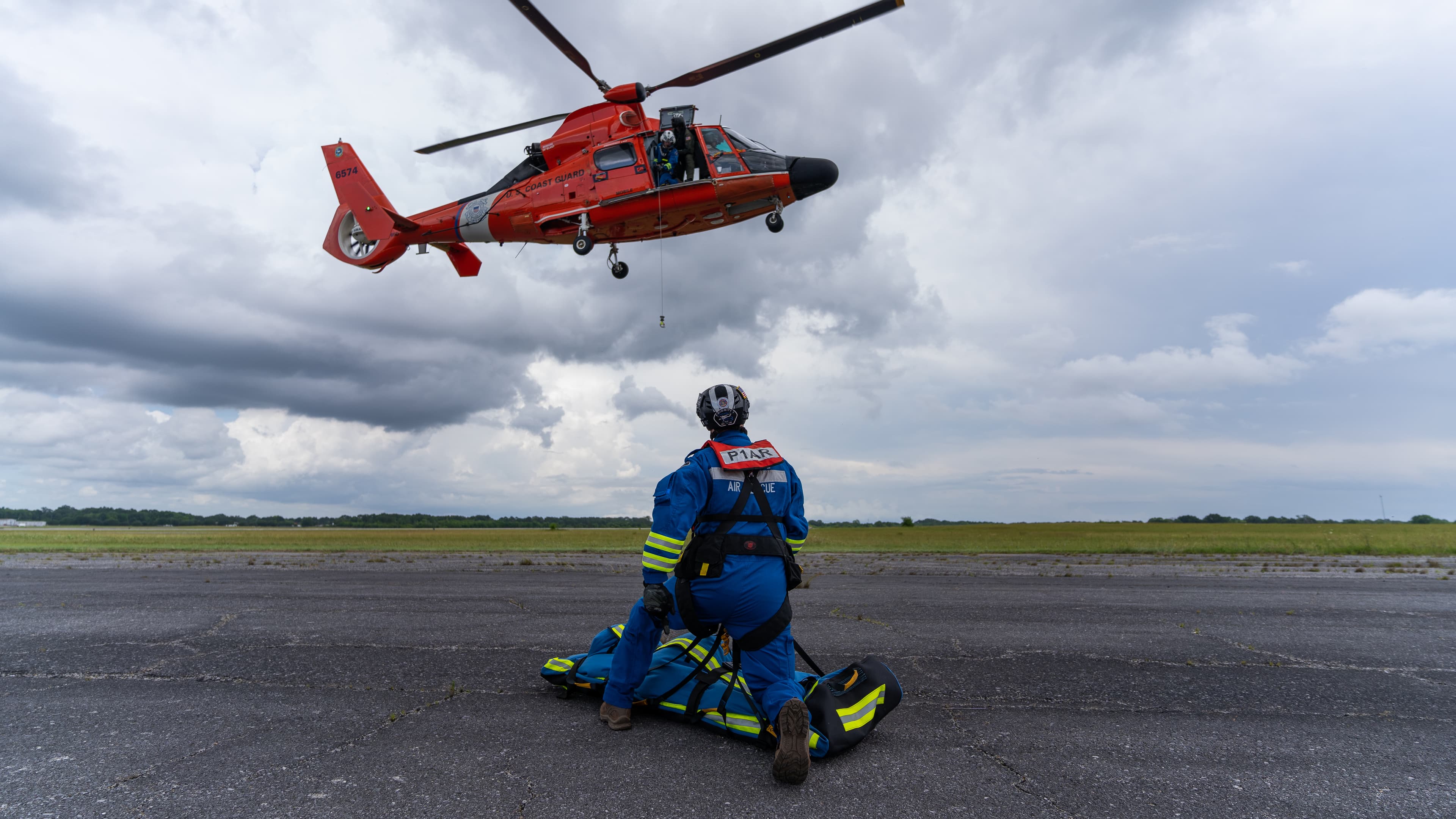
P1AR was selected through a competitive evaluation process that reviewed more than 30 potential training providers. The U.S. Coast Guard came to Priority 1 Air Rescue (P1AR) looking for a partner that could build a standardized, scalable hoist operator "C" School training program that could help accelerate their training timeline.
P1AR delivered a fully standardized 12-day curriculum covering ab-initio through advanced hoist operations. The program integrates classroom instruction, Hoist Procedural Tower (HPT) training, and AAMS simulation. Over 500+ operators have completed the program.
The most telling outcome was not in the contract metrics, but in the behavior change. Live flight instructors—the seasoned operators who had been teaching their own way for years— voluntarily sought out the P1 standard and adopted it for their own instruction. When the people who do not have to change decide to change, you know the standard works.
"We are highly pleased to partner with Priority 1 Air Rescue and obtain their comprehensive and highly standardized hoist training program. The training was extremely beneficial for the pilots, flight mechanics, and rescue swimmers participating from both the MH60 & MH65 STAN Teams as well as operational crews stationed at USCG ATC Mobile."
Lt. Cdr Eric Perdue
♦ Case Study 02
U.S. Customs & Border Protection
175+
Aircrew Trained
SOG Development
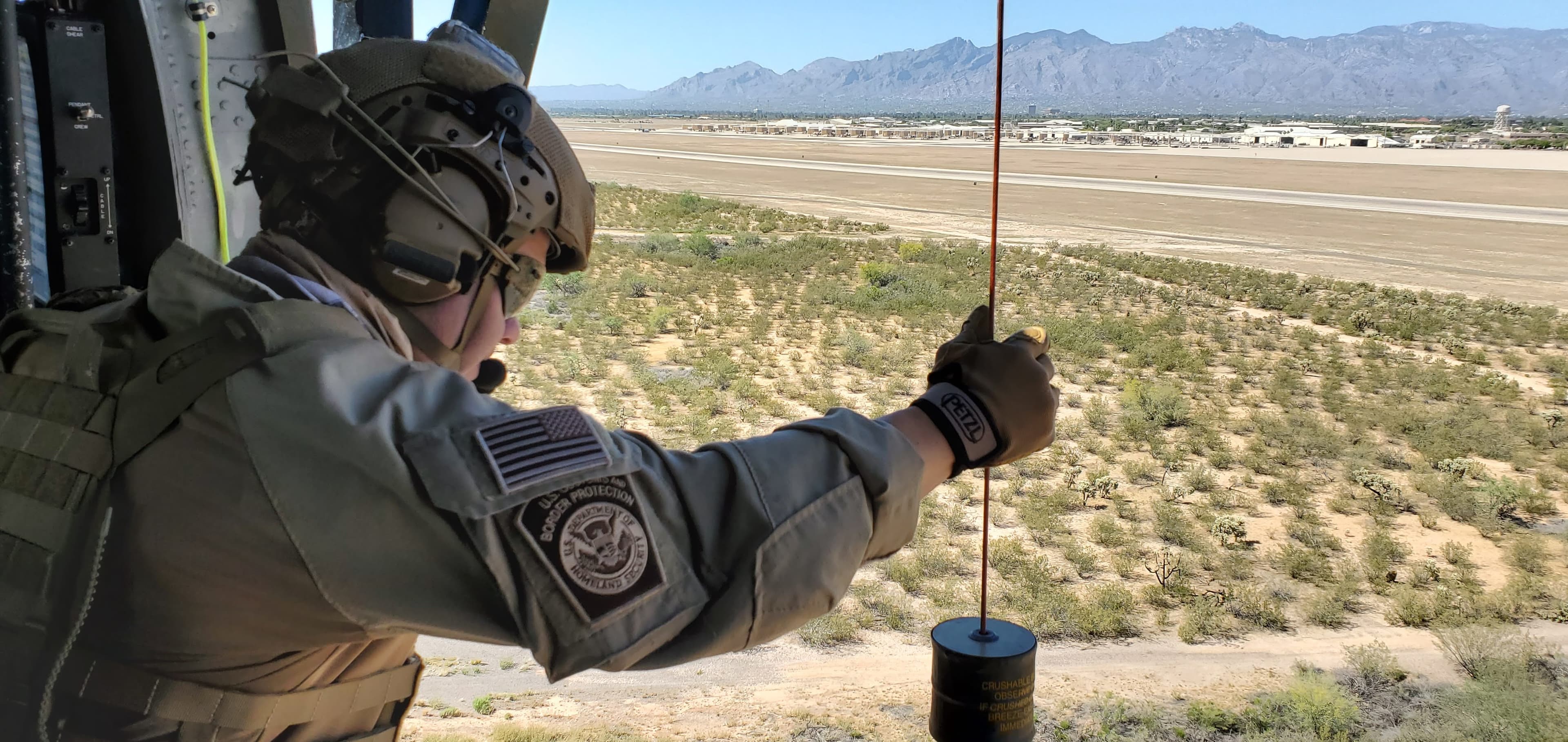
When P1AR began working with CBP, the agency was looking to augment their current procedures with a standardized SAR Standard Operating Guide (SOG) for rear crew operations. No formal hoist training curriculum. No simulator program. Rather than modify an existing program, P1AR worked with CBP to build an entire program around their mission set.
To start, P1AR conducted a comprehensive operational assessment of CBP's aircraft, mission profile, and regulatory requirements. From that assessment, P1AR wrote the SOG, developed the full training curriculum, and trained 175+ aircrew members to the same standard used by the Coast Guard.
The operational payoff came during hurricane response in Texas. CBP and USCG hoist crews—trained to the same P1 standard, operating different aircraft under different chains of command—integrated seamlessly. Different agencies, same procedures. In times of need, such as large scale natural disasters, this interoperability becomes a force multiplier.
"CBP and USCG are now interoperable—a direct result of training to the same standard. During hurricane response in Texas, crews from both agencies operated as a single force."
Operational After-Action Report
♦ Case Study 03
Arizona Department of Public Safety
30+
Aircrew Trained
3
Hoist-Capable Aircraft
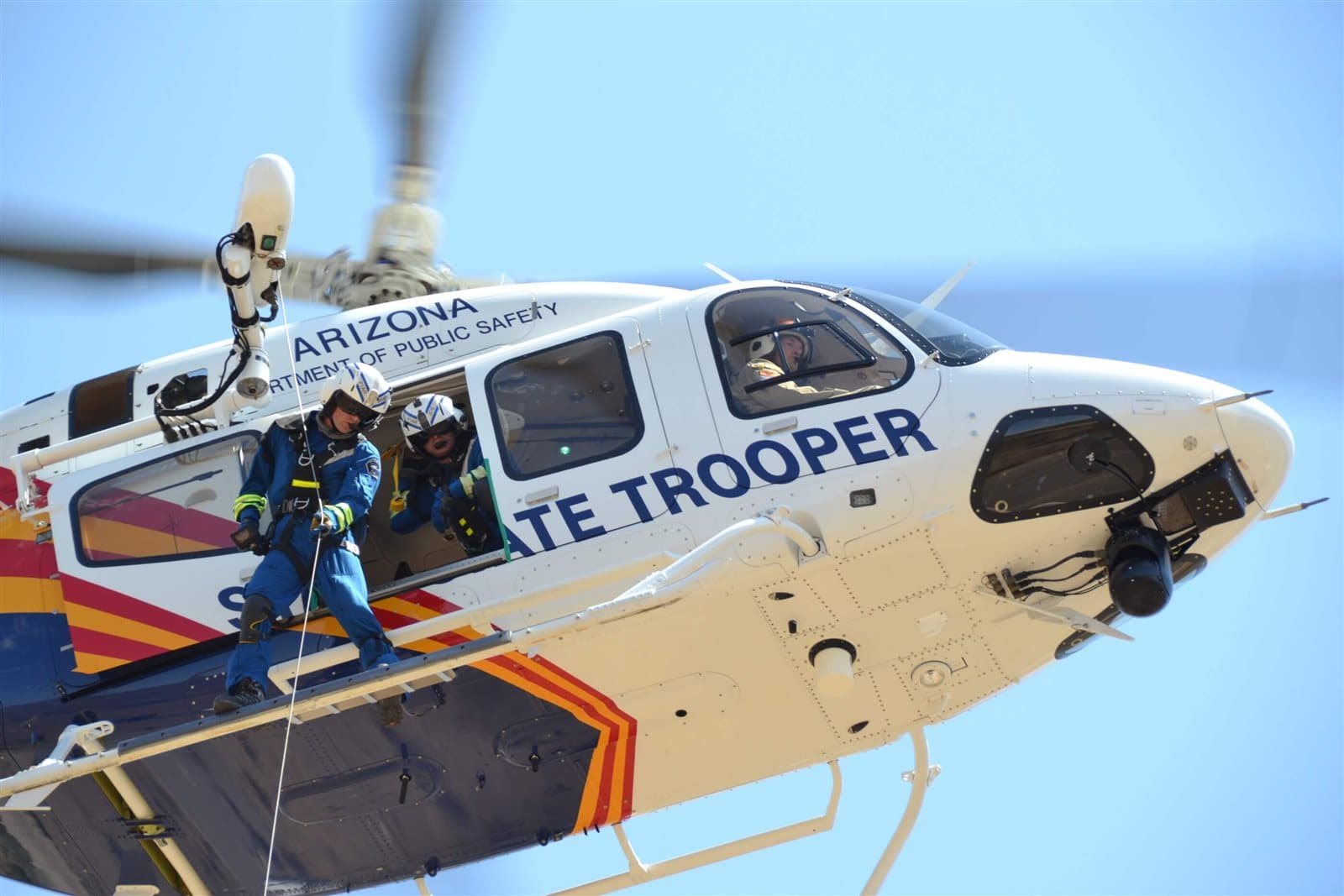
When Arizona DPS acquired its first Bell 429 rescue helicopter, the agency had extensive short-haul experience but no established helicopter hoist program. Rather than simply providing training, Priority 1 Air Rescue partnered with DPS to build the entire operational framework—from mission analysis and qualification pathways to Standard Operating Guides (SOGs), emergency procedures, checklists, communications protocols, and crew standards.
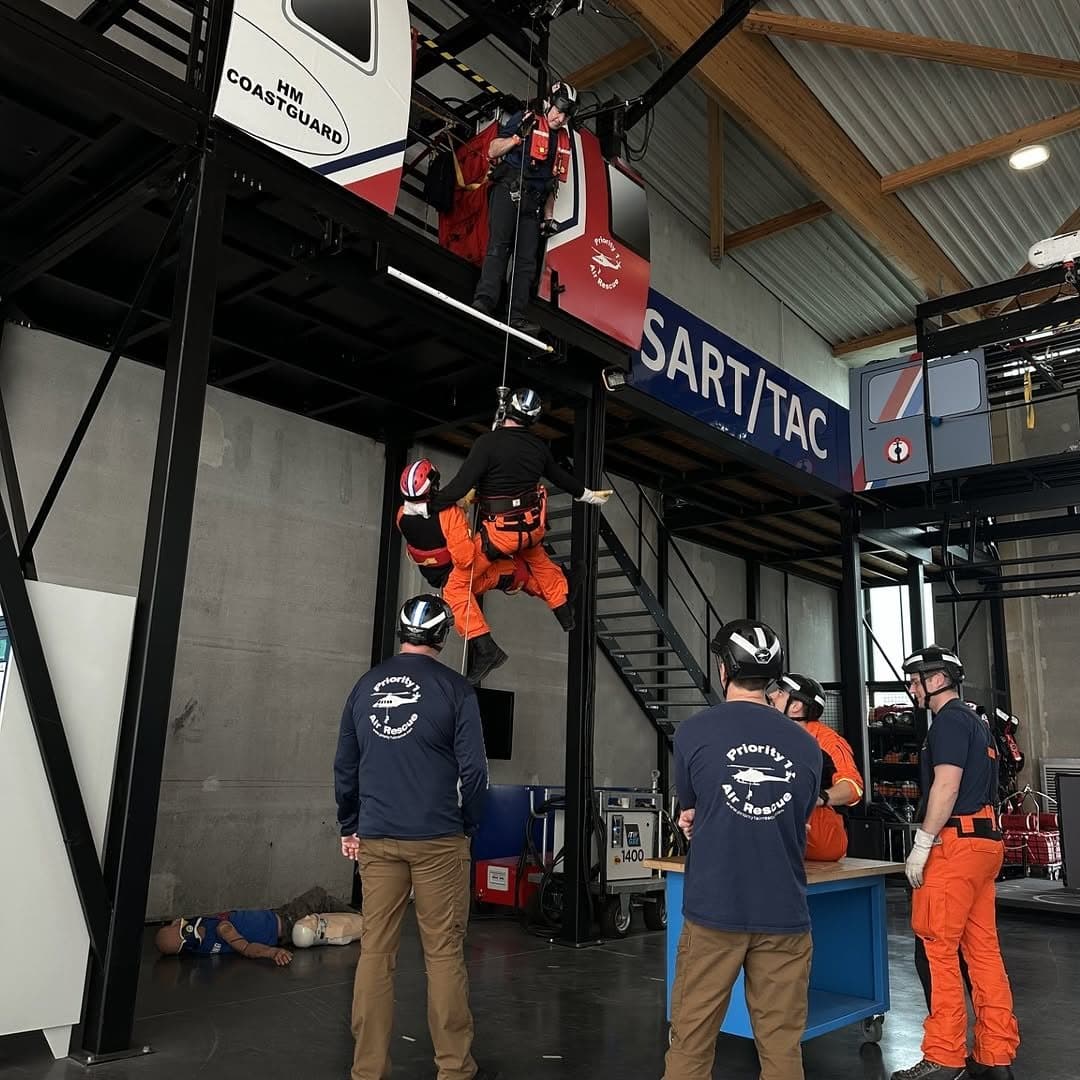
P1AR developed a phased training program that allowed the agency to safely expand from basic daytime inland hoist operations into nighttime, vertical surface/cliff rescue, and swift-water rescue missions, and then progress to scenario-based training in both day and night environments. Initial crews complete a blended curriculum of training at P1AR's Training Academy (SART/TAC) which includes classroom instruction, hoist training, simulation, and live-flight operations before transitioning to an internally managed proficiency program. Based on the original framework established with P1AR, Arizona DPS has grown from a single hoist aircraft to a statewide capability spanning multiple bases and more than 30 qualified personnel.
The greatest outcome was not the aircraft—it was the standard. As neighboring agencies throughout Arizona began acquiring hoist-equipped aircraft, many adopted the same procedures, terminology, and rescue techniques. The result was a level of interoperability rarely seen in public safety aviation, allowing crews from different agencies to work together seamlessly during major rescues, wildfires, floods, and other large-scale emergencies.
"Today, Arizona DPS is recognized as one of the premier public safety hoist programs in the country—not because of a single training event, but because they embraced the standards, maintained proficiency, and built a culture around operational excellence."
Jason Schelin, Director of Training
♦ Case Study 04
Kentucky State Police
Statewide
Multi-Agency Rescue Program
UH-1 & 429
Hoist Operations
When Kentucky State Police decided to expand beyond traditional aviation support missions and establish a helicopter hoist rescue capability, they faced a unique challenge: building a program that could serve an entire state while integrating personnel from multiple organizations.
After receiving funding to equip their aircraft with a rescue hoist, KSP turned to Priority 1 Air Rescue through recommendations from other public safety aviation units operating similar aircraft and rescue programs. P1AR worked alongside KSP from the outset, helping outfit the aircraft, establish crew equipment requirements, install fall protection systems, and develop a comprehensive training pathway for both aviation and rescue personnel.
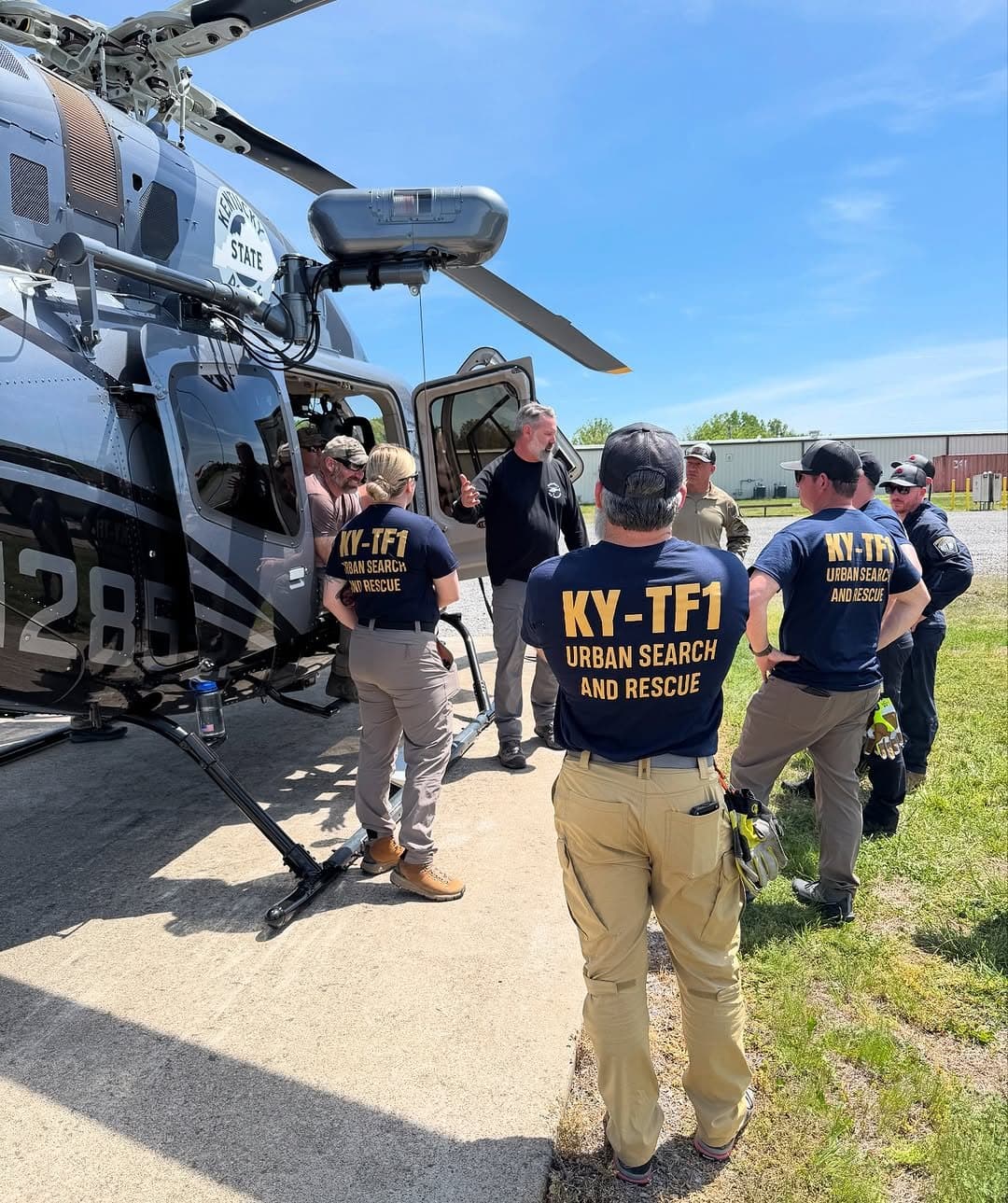
Unlike many agencies, KSP chose to build its program around collaboration. KSP Aviation Branch partnered with the Kentucky Division of Emergency Management and Urban Search and Rescue Task Force 1—alongside other select search and rescue organizations—to incorporate a mix of Rescue Specialists into the training program. This approach created strategically located rescue resources throughout the state while ensuring all participants operated from a common set of procedures, communications standards, and rescue techniques.
Priority 1 Air Rescue delivered a progressive training program that included daytime hoist operations, nighttime missions, vertical surface rescue, and swiftwater rescue. Over time, the partnership expanded to support KSP's transition from the UH-1 Huey platform to the Bell 429, allowing the agency to modernize its fleet while maintaining operational continuity and crew proficiency.
Today, Kentucky State Police operates a rescue capability that extends well beyond a single aircraft or department. By bringing aviation personnel, tactical operators, and regional SAR partners together under one standardized framework, KSP has created a scalable model for statewide rescue operations—one that allows trained personnel from different organizations to work together seamlessly during complex missions.
The result is more than a hoist program. It is a coordinated rescue network capable of responding across Kentucky with shared procedures, common training standards, and a unified approach to mission execution.
"The collaboration between KSP and USAR TF-1 during this course ensures a unified response during natural disasters and technical rescue missions. By standardizing communication and safety protocols between aircrews and ground-based rescue specialists, the commonwealth strengthens its ability to protect citizens in the wake of floods, tornadoes or wilderness emergencies."
Doug Hargreaves, State USAR Coordinator
♦ Case Study 05
Bonneville Power Administration
125+
Linemen Trained Annually
8-Week
Annual Training Cycle
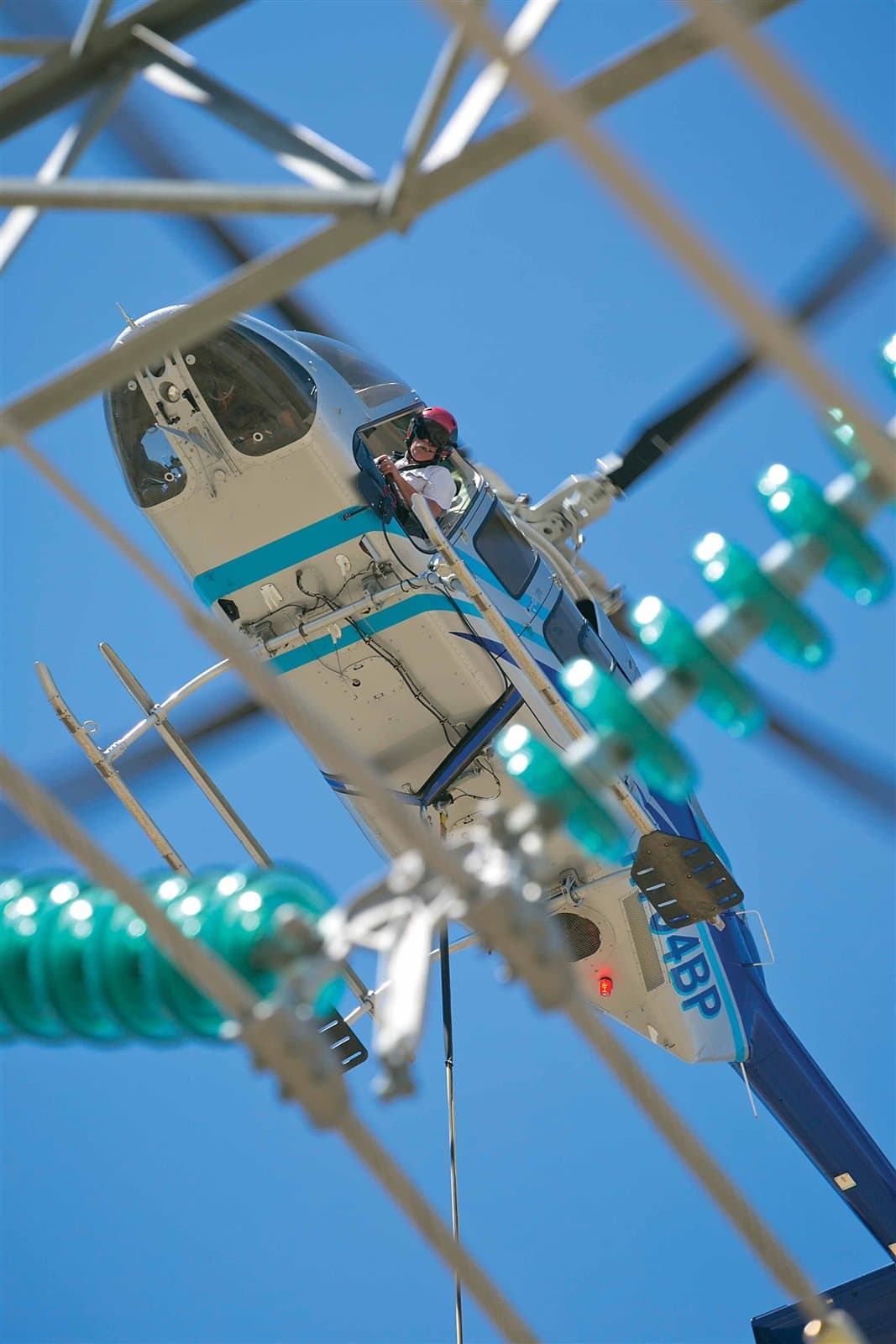
For utility operators, helicopter operations are not a specialty mission—they are often the only practical way to access critical infrastructure in remote and difficult terrain.
Bonneville Power Administration (BPA), one of the largest electric transmission organizations in the United States, relies on helicopters to support inspection, maintenance, and emergency response activities across thousands of miles of transmission lines throughout the Pacific Northwest. Working in these environments requires personnel to operate in and around helicopters while suspended hundreds of feet above the ground, often in challenging weather and terrain conditions.
To support these operations, BPA partnered with Priority 1 Air Rescue to develop a standardized training program focused on utility aviation safety, human external cargo operations, emergency procedures, and lineman rescue techniques. The program combines classroom instruction, practical exercises, scenario-based training, and recurrent proficiency events designed to ensure crews remain prepared for both routine operations and low-frequency, high-consequence emergencies.
Over the course of an eight-week annual training cycle, approximately 125 linemen participate in rescue and operational proficiency training. The objective is not simply regulatory compliance—it is developing a workforce capable of safely operating around helicopters while maintaining the highest standards of crew coordination, communication, and risk management. Priority 1 instructors provide continuous evaluation, debriefing, and standardization throughout the training process to ensure consistency across BPA's geographically dispersed workforce.
The result is a mature utility aviation program built around the same principles found in the world's most demanding helicopter rescue organizations: standard procedures, recurrent training, disciplined risk management, and a commitment to continuous improvement.
For BPA, the investment is about more than rescue capability. It is about ensuring that personnel working on critical infrastructure can safely execute their mission every day while maintaining the operational readiness required to restore and protect essential services for millions of customers throughout the Pacific Northwest.
"This is the BEST training I have ever had in my 20 years at BPA. This is money very wisely and well spent! We need more of this type of training."
BPA Lineman
♦ Case Study 06
United Kingdom Search & Rescue
50%+
UK SAR Rear Crew Trained
10 Bases
20+ Aircraft · National SAR Coverage
When the United Kingdom transitioned its Search and Rescue mission from military to civilian operators back in 2016, it created an unexpected challenge. For decades, the Royal Air Force and Royal Navy had not only conducted SAR operations but also served as the primary training pipeline for new winch operators and rescue specialists. In the beginning, private operators such as Bristow and CHC continued to rely on these schoolhouses; however, when these military training programs ended, the civilian SAR system suddenly lost its primary source of qualified personnel.
It was at this point that Bristow approached Priority 1 Air Rescue (P1AR) with a critical question: could a civilian training organization develop the next generation of UK SAR rear crew that would prepare them for the demanding SAR missions found across the UK?
The challenge was significant. UK SAR operates across some of the most demanding environments in Europe, including the North Sea, the English Channel, the Scottish Highlands, remote islands, mountain regions, and rugged coastal cliffs. Crews operate from ten bases using multiple aircraft types, including the Sikorsky S-92, Leonardo AW189, and Leonardo AW139. Standardization across airframes, operating areas, and mission profiles would be essential.
Rather than creating a new program from scratch, P1AR immersed itself in existing UK SAR procedures, tactics, techniques, and operating standards. Working closely with Bristow and drawing upon decades of operational SAR experience, the team adapted P1AR's proven ab-initio training methodology to align with the highly structured requirements of the UK methods.
The first training class consisted of paramedics with no prior hoist or rescue experience. Success was far from guaranteed: many believed that only military-trained personnel could fill the role. Yet, those initial graduates went on to become some of the most successful rescue specialists in the organization, proving that a new civilian training pathway could produce operationally ready personnel and augment SAR crews with paramedical expertise.
Over time, the partnership expanded beyond hoist operations to include broader aircrew skills, emergency procedures, basic airmanship, simulator integration, and rescue best practices drawn from P1AR's global operational experience. What first began as a training solution evolved into a deeper collaborative exchange of operational knowledge that helped shape the next generation of civilian SAR professionals.
Today, Priority 1 Air Rescue trains UK SAR personnel annually and to date has trained more than half of the organization's rear crew workforce. The program continues to support one of the world's most respected national search and rescue services, ensuring that highly qualified winch operators and winch paramedics are prepared to respond across the United Kingdom's diverse and demanding operating environments.
The result is more than a training program. Today this program has evolved into a sustainable talent pipeline that has helped bridge the gap between military and civilian SAR operations—preserving operational readiness while enabling one of the largest civilian search and rescue systems in the world to continue saving lives.
And that first class of trainees? One of them went on to become the first female winch paramedic in the UK and winner of the Billy Deacon SAR Memorial Trophy.
♦ Additional Engagements
The Standard at Work—Globally
♦ Client
U.S. Air Force
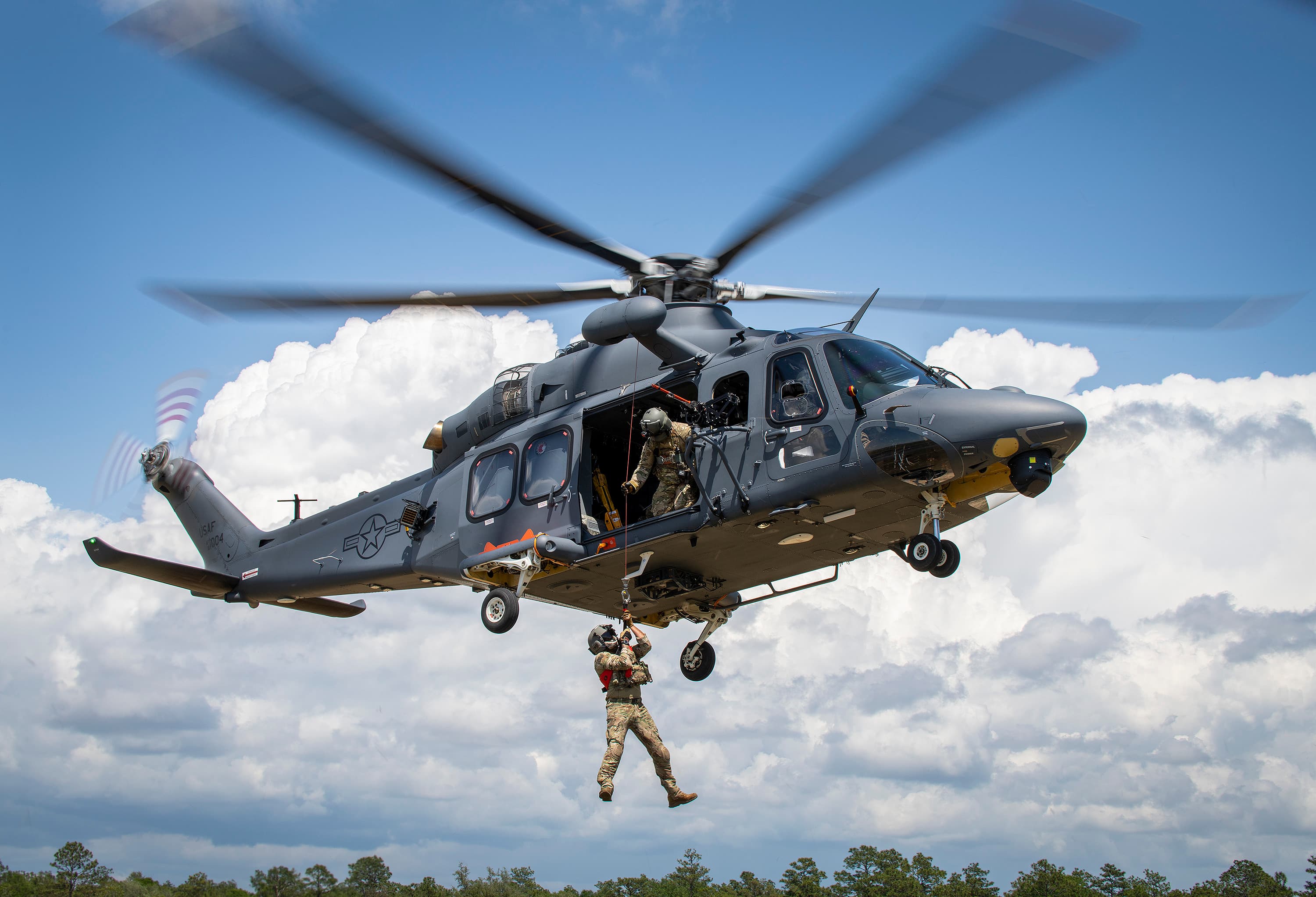
5-year contract for MH-139 Grey Wolf special mission aviator training. The USAF reviewed dozens of potential bidders and determined only P1AR was compliant. P1AR trains over 100 special mission aviators per year.
♦ Client
Highly Specialized LE Agency
Specialized tactical training for a large agency's aerial rescue team. Mission-specific curriculum covering aerial insertion, extraction, and platform integration for law enforcement operations.
♦ Client
French MoD / FGAU
Training delivered through the SART/TAC Europe facility in Bordeaux. Multi-platform integration for French military and gendarmerie special operations units.
♦ Client
Royal Netherlands Air Force
Standardized hoist operator training delivered to RNLAF crews operating in joint coalition environments. Interoperability with NATO partner forces was the primary objective.
♦ Client
Bristow Group
Commercial SAR operator training to EASA AirOPS SPA-HHO standards. Bristow operates one of the world's largest civilian helicopter fleets—standardization across bases was critical.
♦ Your Agency
Request a Capability Brief
We will prepare a detailed capability brief tailored to your agency's platform, mission set, and operational requirements—including references from comparable programs.
Request a Brief